|
PLEASE CLICK ON THE THUMBNAILS
|
|||||||||
|
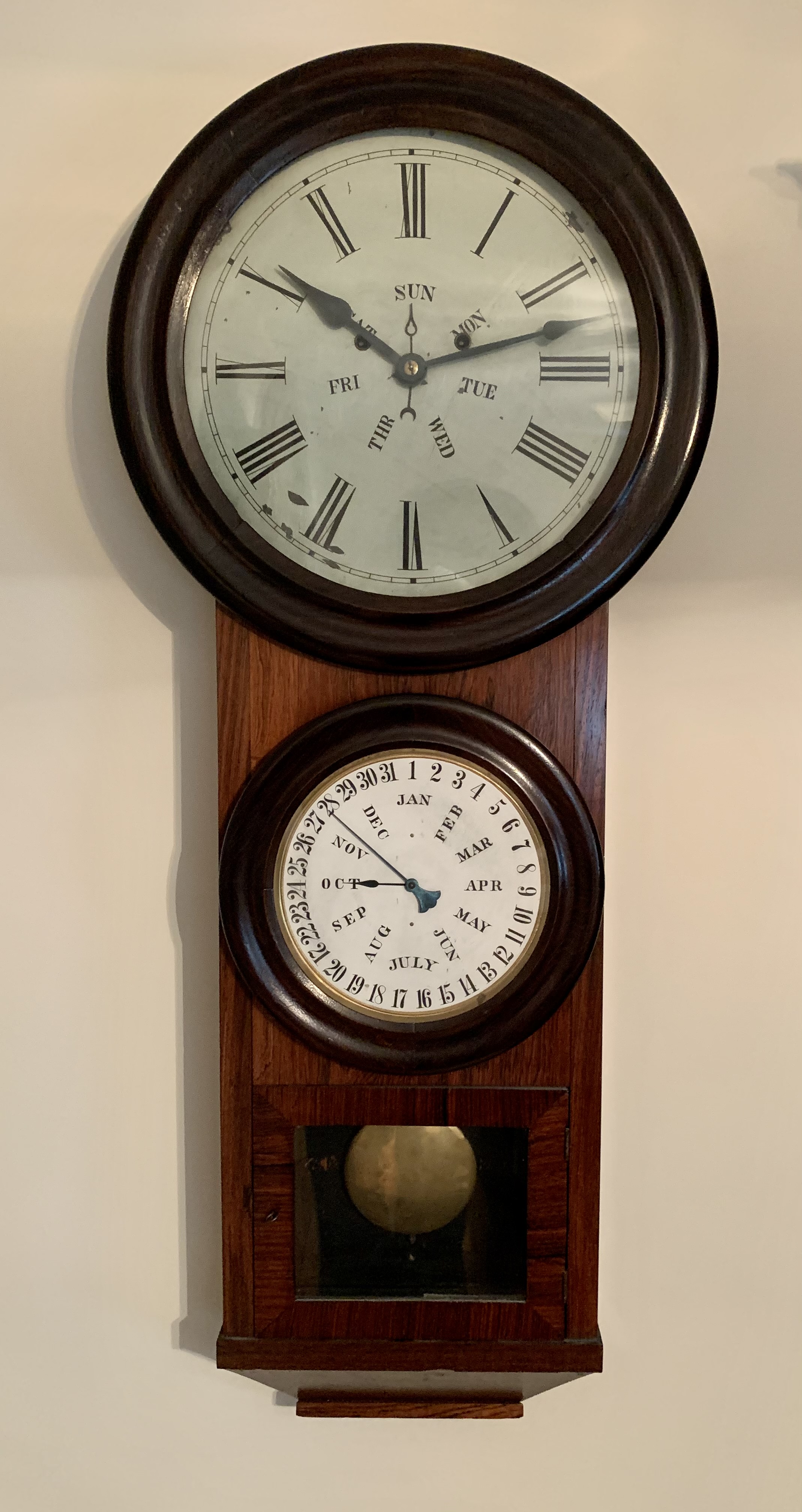
This is
an example of an early American perpetual calendar clock (circa 1867 -
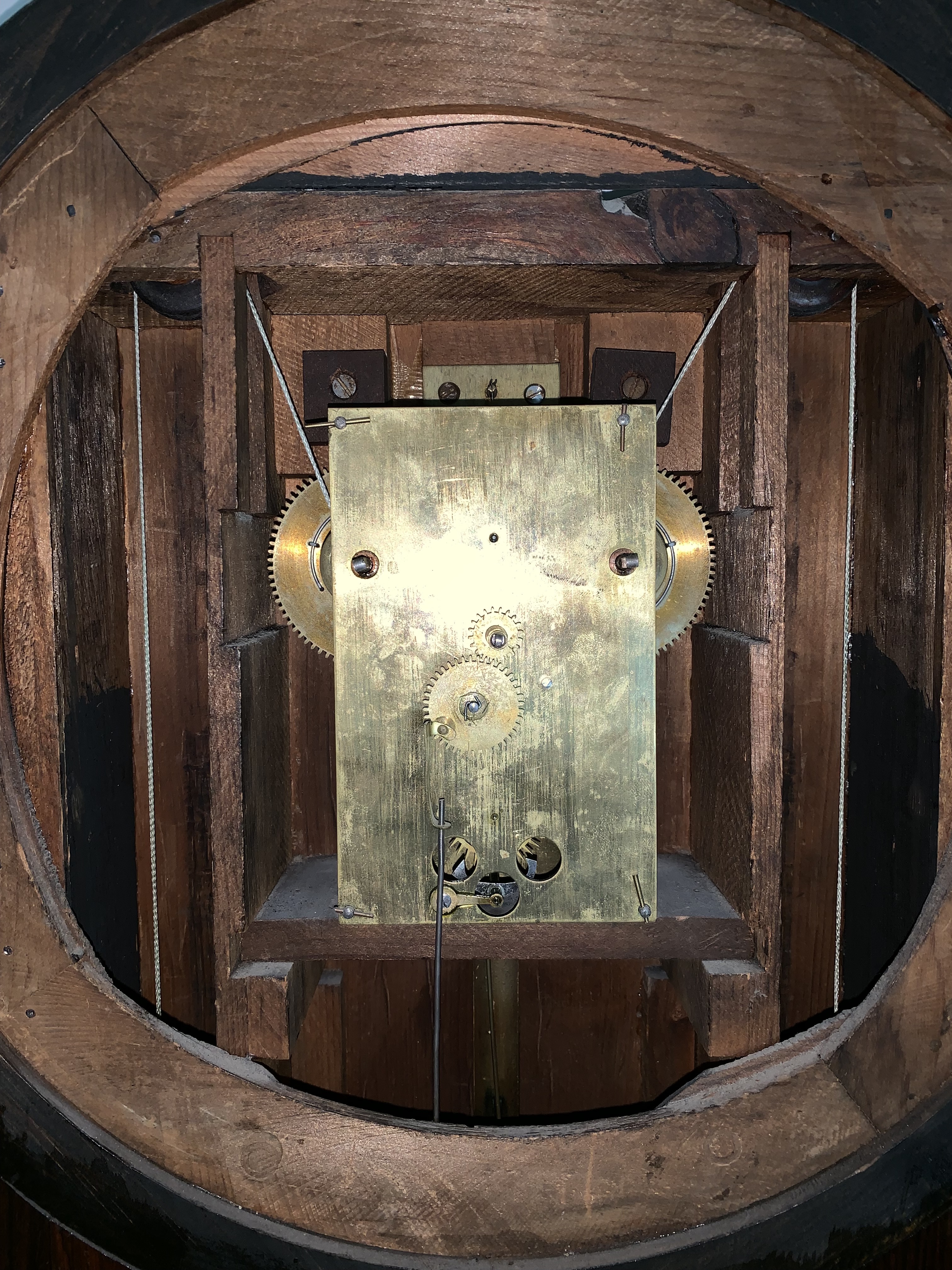
1868). It features an eight-day weight-driven movement in the
"upside down" configuration with a deadbeat escapement created
by Solomon C. Spring, Bristol, CT, with The
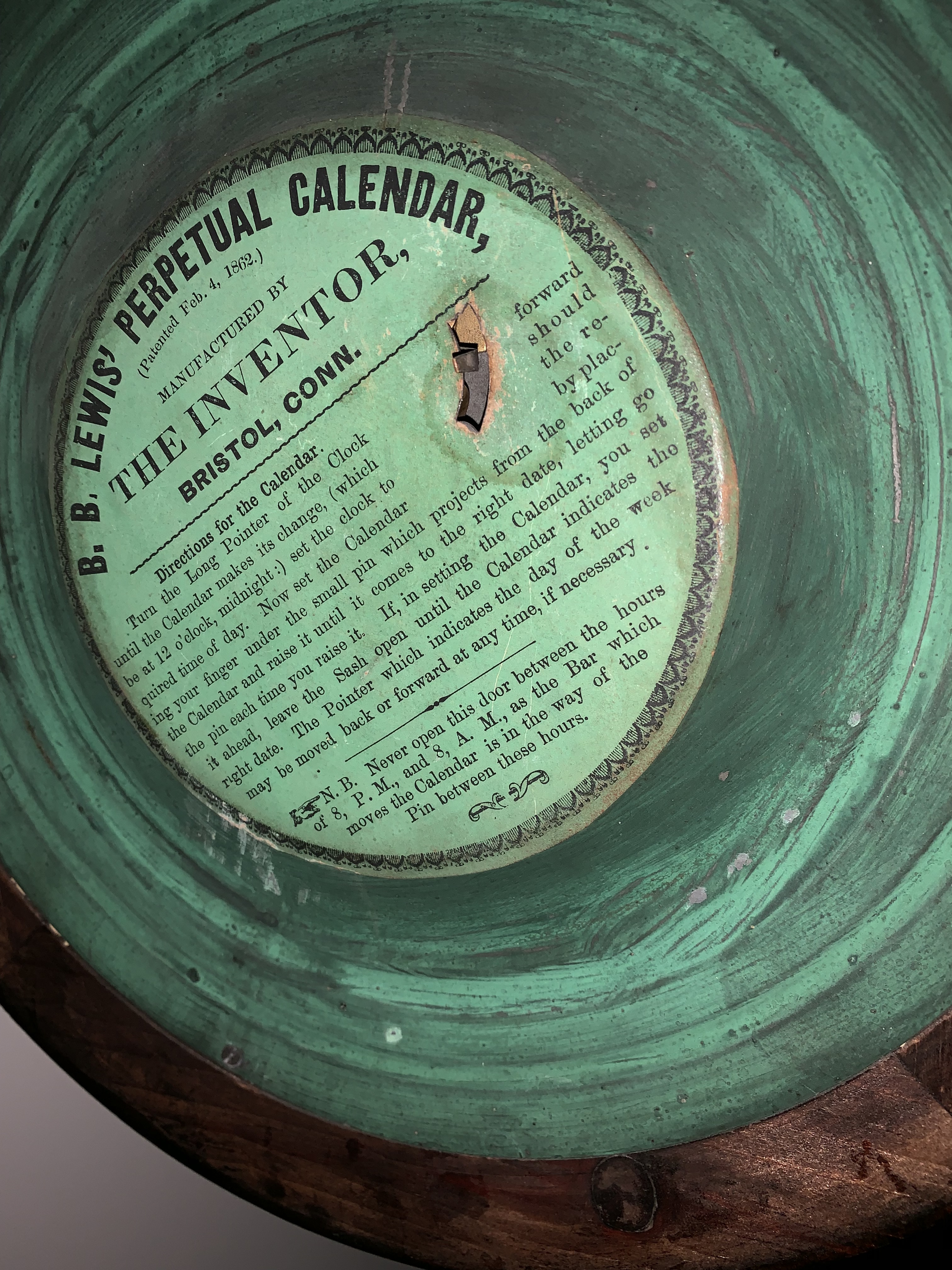
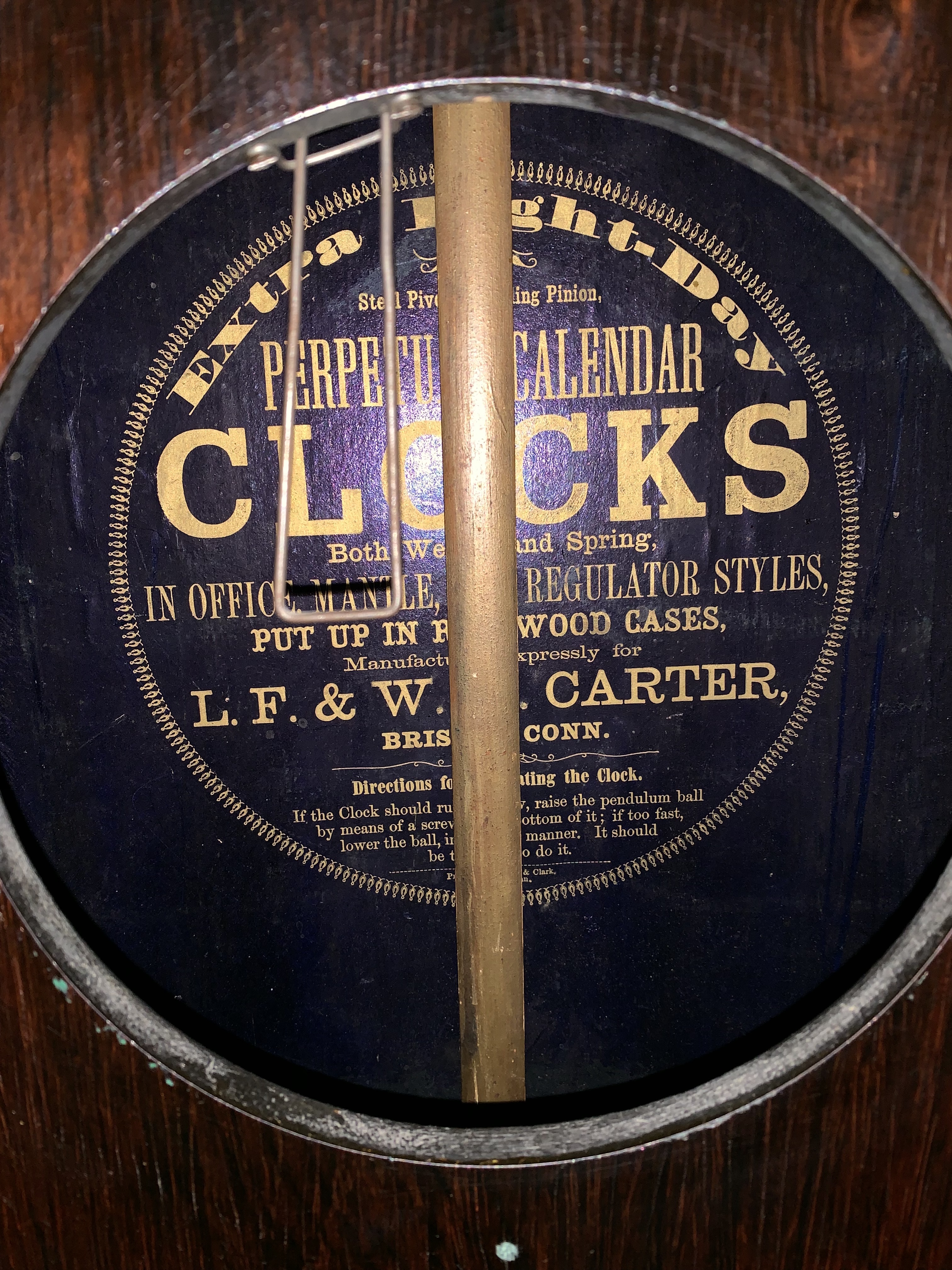
calendar mechanism was produced by Benjamin B. Lewis (inventor and
patent holder) for L.F. and W.W. Carter (retailers), all of Bristol,
CT. The case is rosewood veneer with the original grain painted
rosewood finish applied to the upper door and calendar door
intact. Finish on the remainder of the case is old but was
refreshed. |
|||||||||
|
|
||||||||